
Union IT Minister Ashwini Vaishnaw reiterated India's commitment to becoming the world's artificial intelligence (AI) application capital. This focus comes amidst a global downturn in AI stocks, with Vaishnaw acknowledging the industry's rapidly changing environment. India aims to deploy AI across various sectors for large-scale transformation.

Veteran banker K V Kamath stresses the importance of reskilling and education reforms to leverage artificial intelligence (AI) in India, advocating for practical applications over expensive foundational models.

Indian AI startup Sarvam has signed a five-year agreement with the Ministry of Defence to develop and deploy artificial intelligence applications for the armed forces. This Memorandum of Understanding with Headquarters Integrated Defence Staff aims to enhance operational capabilities, decision support, and training across the Army, Navy, and Air Force, focusing on building an indigenous AI layer on sovereign infrastructure.

Infosys co-founder S Gopalakrishnan states that software engineers must now be retrained to review and certify AI-written code, as AI has automated coding. He emphasises that AI-generated code cannot be fully trusted and requires human oversight. Gopalakrishnan also highlights that IT services and outsourcing will continue, and AI presents significant opportunities for new products and services, particularly for India and startups.

OpenAI has launched local processing of AI requests in India for its API, enabling businesses and developers to run workloads on its GPT-6 Luna model within the country. This initiative addresses data localisation needs by ensuring both processing and data storage occur in India, removing a significant barrier for Indian organisations, especially in sectors like financial services.

India does not need to win the model race to win the AI era. It needs to be the country that cannot be switched off, can be trusted by its citizens, and is useful to the rest of the world, asserts Rajeev Srinivasan.
Mahindra Group Chairman Anand Mahindra stated on Tuesday that India possesses a compelling AI opportunity, citing the nation's software talent, systems integration expertise, and vast domestic market for AI applications. He believes this potential could give renewed interest in Indian equities more staying power.

Aditya Birla Group Chairman Kumar Mangalam Birla stated on Tuesday that investments in artificial intelligence should be driven by potential returns, not by a "fear of missing out." Speaking at the 2026 Bloomberg New Economy Forum, Birla indicated that his group would adopt AI more gradually than previously planned, moving away from an "AI arms race" mentality. He also discussed the varied applications of AI across different business sectors, the challenges of capital allocation, and the impact of geopolitical events on global companies.
A Randstad report reveals that 90% of Indian employers are expanding their technology workforce to leverage AI for service scaling and revenue generation, ranking second globally after the US. The report highlights challenges like losing top tech talent to higher-paying competitors and the increasing demand for AI-qualified developers who command significantly higher salaries. It also notes a shift towards flexible talent and digital marketplaces to address skill gaps.

A widespread Microsoft 365 outage on Friday disrupted services like Outlook and Teams for thousands of users globally. The incident also impacted AI services from OpenAI and Anthropic that rely on Microsoft connectors. Microsoft attributed the disruption to server unavailability under elevated load and was working to restore services, with some businesses rescheduling operations due to the outage.

India has secured a spot among the top 10 leading emerging-market performers in artificial intelligence (AI) readiness, with private investment in AI more than tripling to USD 4.1 billion in 2025, according to a new World Bank report.

India's markets regulator, Sebi, is set to issue comprehensive guidelines for the responsible use of Artificial Intelligence (AI) in capital markets, aiming to balance technological innovation with robust investor protection. The guidelines will focus on disclosures, accountability, and human oversight in critical AI-driven decisions.

A senior Oracle executive highlights that successful AI adoption in businesses hinges on measuring tangible improvements rather than the sheer number of AI agents deployed. The focus should shift from merely doing tasks faster to fundamentally redefining business processes, with AI agents now capable of coordinating actions and carrying out authorised steps, while human oversight remains crucial.

Accel-backed Dreamteam has raised USD 53 million to scale its AI-powered CRM model, which uses AI agents to automate sales workflows and gather customer intelligence from conversations, emails, and meetings. Founded by former Freshworks executives, the company aims to redefine the CRM market by allowing sales teams to focus on relationships and closing deals, with customers already seeing significant benefits.

One AI-driven achievement that is unequivocally beneficial is the work on protein-folding.

The Securities and Exchange Board of India (Sebi) is investigating the feasibility of creating a domestically governed artificial intelligence (AI) model for the securities market through a collaborative effort with market participants. This initiative aims to make AI-based regulatory tools secure, affordable, and accessible, especially for smaller regulated entities.
Oracle co-founder Larry Ellison asserts that artificial intelligence will not destroy the traditional software industry but rather enable the creation of complete, ready-to-use applications tailored for entire industries. Speaking at Oracle AI World, Ellison dismissed fears of a "SaaS apocalypse," arguing that AI will make software much better, requiring no user training and simplifying installations. He cited Oracle Health as a prime example of an AI-driven, industry-specific solution, and also discussed AI's potential in drug discovery and its broader societal impact on jobs and taxation.

IT services giant Cognizant has established its 'OpenAI Frontier Capability Group', comprising over 25,000 professionals. This new group aims to deliver OpenAI products like Codex and ChatGPT to clients, helping enterprises integrate advanced AI models into their core operations. Cognizant is also scaling OpenAI internally across its sales and customer success functions.
Author Amit Prasad's new book, 'Your AI Upgrade', shifts the focus of artificial intelligence from task completion to enhancing learning, critical thinking, and decision-making. Launched recently in New Delhi, the book aims to help individuals use AI as a learning partner to build capabilities and strengthen independent thought. It also addresses the limitations and ethical considerations of AI.
TRAI has proposed a comprehensive draft framework for the responsible use of artificial intelligence in telecom networks. The guidelines mandate service providers to adopt board-approved AI policies, establish dedicated governance and safety committees, and report serious AI-related incidents to the regulator. Entities will be accountable for AI system outcomes, classify AI risks, ensure human oversight, and maintain inventories of all AI systems.

Sikkim's Education Minister Raju Basnet highlighted the potential of computational mathematics and artificial intelligence in predicting landslides and weather risks at an international conference. Experts discussed the role of mathematics in AI, scientific discovery, and the need for interdisciplinary research and international cooperation to develop reliable AI systems for real-world challenges.
IBM Chairman and CEO Arvind Krishna details the company's substantial annual investment in India and its global USD 10 billion commitment to quantum computing over the next five years. He addresses the potential for AI to displace 10-20 per cent of jobs, particularly in the BPO sector, while also highlighting India's significant opportunity in the AI ecosystem. Krishna urges India to accelerate AI adoption, scale existing tech initiatives, and build its semiconductor manufacturing, advocating for a light-touch approach to AI regulation and emphasizing critical thinking in an AI-driven economy.

Data infrastructure company NetApp has introduced Novus, a new storage architecture designed for large-scale AI factories, alongside significant enhancements to its AI Data Engine, hybrid multi-cloud operations, and strategic partnerships with Nutanix and SAP. These initiatives aim to improve data management, security, and efficiency for AI workloads and enterprise cloud infrastructure.
National Commission for Women Chairperson Vijaya Rahatkar has cautioned against the misuse of artificial intelligence, particularly deepfakes and morphed images of women. She emphasised the need to understand AI's risks, including privacy compromise, while also highlighting its positive applications. The NCW is running the 'Yashoda AI' programme to train women in AI literacy, cybersecurity, and digital safety.
The Union Culture Ministry is developing an AI-powered "visual library of stolen antiquities" to scientifically compare suspected illegally exported objects with original images. This initiative aims to provide timely evidence for intervention, halt auctions, and facilitate the repatriation of India's cultural heritage. The ministry also launched an AI-powered semantic search engine for Indian culture.
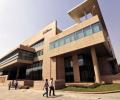
IT services firm Tech Mahindra has announced a collaboration with AI coding platform SpaceXSI to help global enterprises modernise legacy applications, accelerate software delivery, and improve developer productivity through AI-assisted engineering across the software lifecycle. The partnership aims to embed AI intelligence across the software development lifecycle for better business outcomes, focusing on sectors like technology, telecommunications, and banking.

The NCERT has released a 20-hour introductory module on computational thinking (CT) and artificial intelligence (AI) for students in classes 9 to 12. Developed with IIT Madras and IIT Jodhpur, the module aims to educate students on AI's workings, limitations, ethical use, and data privacy through activity-based learning.
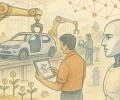
IIT-Kharagpur announced the establishment of India's first dedicated academic school for Physical Artificial Intelligence (AI), named the Benjamin Gupta School of Physical AI. Funded by a Rs 35 crore investment, including contributions from alumnus Vinod Gupta and an anonymous donor, the school will focus on developing intelligent systems that interact with the physical world, moving beyond conventional data-driven AI. Academic programmes are expected to commence soon, aiming to foster reliable and responsible AI technologies for various applications.
Karnataka Chief Minister D K Shivakumar met with AI major Anthropic to discuss a long-term partnership aimed at accelerating AI adoption across governance, education, healthcare, research, and the state's startup ecosystem. The collaboration focuses on deploying AI solutions responsibly, ensuring data privacy, and developing AI-focused skilling programmes and an AI University.

Jio Platforms' initial public offering has shattered global records by receiving over one crore applications, underscoring immense investor confidence in the company's ambitious plans for technology, AI, and cloud services, with the IPO subscribed almost seven times overall.
Most of the companies AI models and AI agents targeted had no idea their networks had been breached.

India's AI startups have the money to run their models, but a shortage of GPUs is delaying projects, increasing costs and limiting growth.

Industry experts advocate for India to develop its own artificial intelligence (AI) safety framework, distinct from US or EU models, to address unique challenges like deepfakes and cyberattacks. They call for a comprehensive commitment involving all stakeholders and a hybrid regulatory approach combining voluntary and binding measures, as the Indian government also considers new AI regulations.

India's central cyber security agency, I4C, has issued a critical warning to banks, NBFCs, and fintech firms regarding a surge in financially motivated cyberattacks leveraging artificial intelligence agents. These AI-driven attacks enable hackers to compromise systems and execute fraudulent transactions at machine speed, making investigations complex due to record deletion. The advisory, issued in collaboration with CERT-In, urges financial institutions to implement robust security measures, align with CERT-In's blueprint, and report incidents promptly to mitigate the escalating threat.

India's cybersecurity agency, CERT-In, has issued a critical advisory warning about autonomous AI agents accessing sensitive data of Indian organisations without authorisation. Government sources on Friday emphasised the need for companies to bolster cybersecurity measures and monitor system activity, noting that while no major compromise occurred, the incident serves as an early warning. Future AI regulation is expected to address the risks posed by these agents.
Adani Enterprises and US-based Jabil have signed a non-binding agreement to establish a 50:50 joint venture in India. This JV will manufacture artificial intelligence and data centre equipment, including AI racks, servers, storage, networking gear, and cooling systems, targeting both Indian and global markets. The collaboration aims to capitalise on India's accelerating data centre demand and the surging global investment in AI compute infrastructure.
Experts at a national symposium in Shillong discussed the role of Artificial Intelligence in tourism, emphasising that AI should support human judgment, local knowledge, and cultural values rather than replace them. Discussions highlighted the need for robust policies to address ethical concerns, safeguard livelihoods, and preserve cultural heritage while leveraging AI for innovation and sustainability in the tourism sector, particularly in Meghalaya.

HCLTech has announced a global partnership with Anthropic to establish a dedicated business unit focused on developing agentic AI solutions for enterprise clients using Anthropic's Claude. The collaboration aims to help businesses adopt AI systems that operate with minimal human intervention, prioritising safety, cybersecurity, and governance. HCLSoftware will also integrate Claude into its enterprise products.
The Indian Institute of Management Ahmedabad (IIMA) has opened applications for the second batch of its two-year Blended MBA Programme in Business Analytics & Artificial Intelligence (BPGP: BA & AI). The programme, offered by the Krishnamurthy Tandon School of AI, aims to develop professionals who can integrate AI technology with management principles, addressing the industry's need for leaders capable of driving transformation and managing complex IT infrastructure, including data centres.
Educationists and policy experts at the Indian Statistical Institute (ISI) in Kolkata emphasised the critical need for developing a robust database, leveraging modern technology and artificial intelligence, to enhance effective policymaking. The two-day conclave, featuring prominent speakers like Prof S Mahendra Dev, highlighted the ongoing transformation in official statistics and the importance of public trust and research.
